What happens to creativity when the cost of fucking around approaches zero?
“Fuck around and find out” has two halves, and each one has a price. For most of the history of commercial creativity, both were high. Making an idea took a team, a week and a lot of coffee. Finding out whether it worked took a media budget, a launch and often years.
The first price is now collapsing. This is an experiment in what happens next.
Here is the whole argument in one chart. Drag the dot, try the presets, and come back to it as you read.
The model: $100,000 to spend before launch, split in whichever way works best between making ideas and testing them. The idea you launch, you find out about anyway. Taste multiplies the chance that an idea you pick is good, but you can't pick good ideas the pile doesn't contain.
Ten ideas for finance bros
The brief: promote the new foldable iPhone to finance bros. We gave it to One Dollar Concept, a small service we built to see what happens when you push the cost of ideas towards zero. You type a brief, choose how many concepts you want, and about ten minutes later you get them back: each with a line, an insight, an idea and a rough marker sketch. A dollar each.
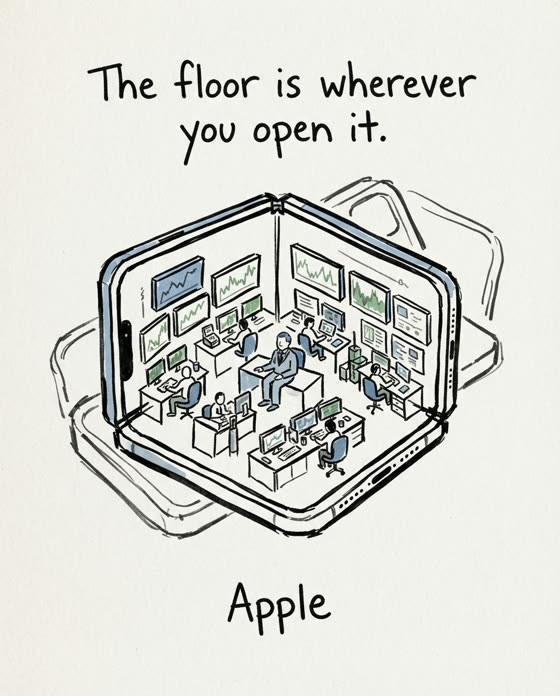
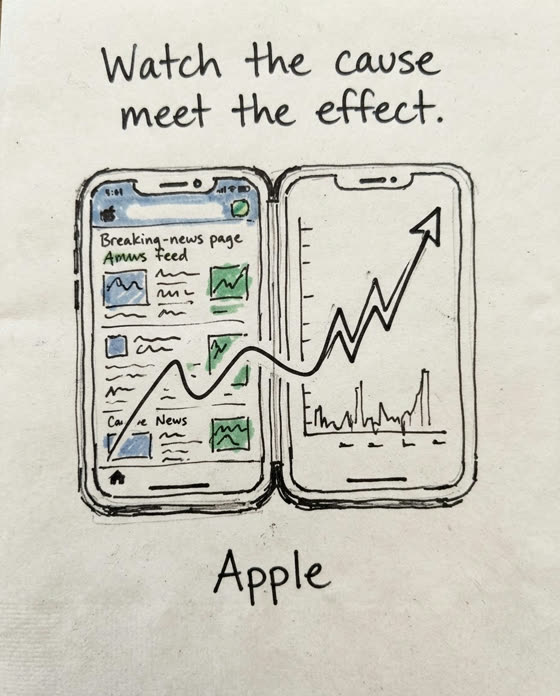
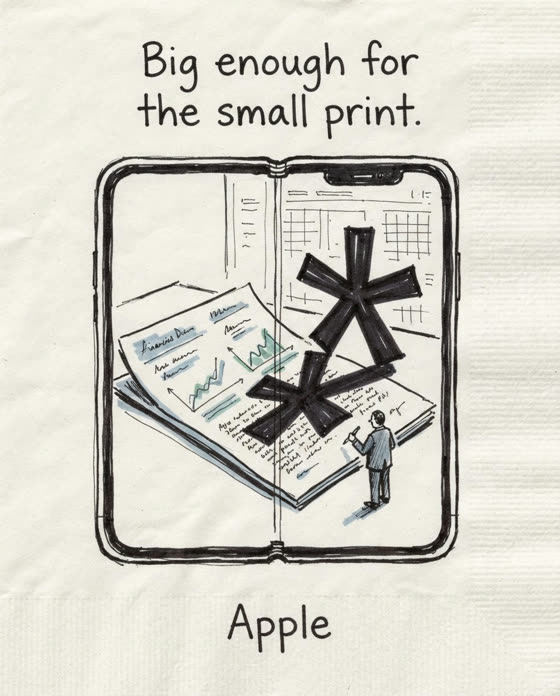
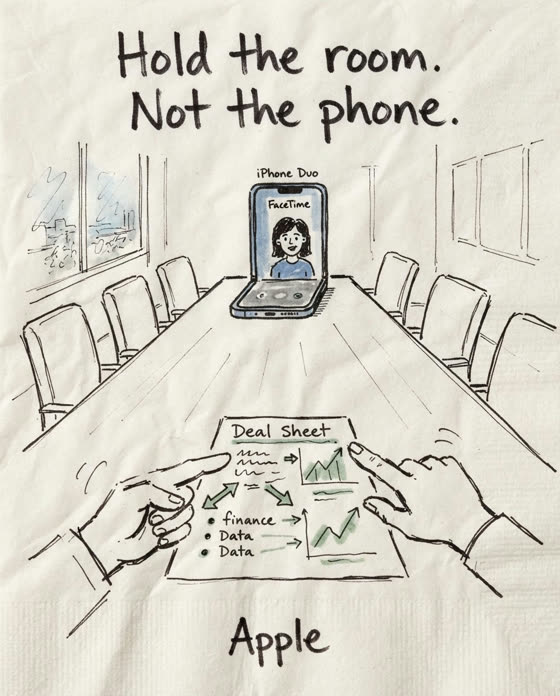
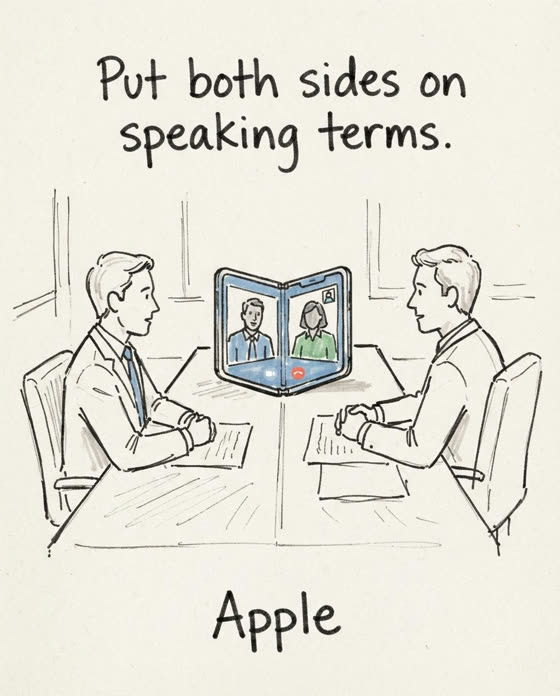
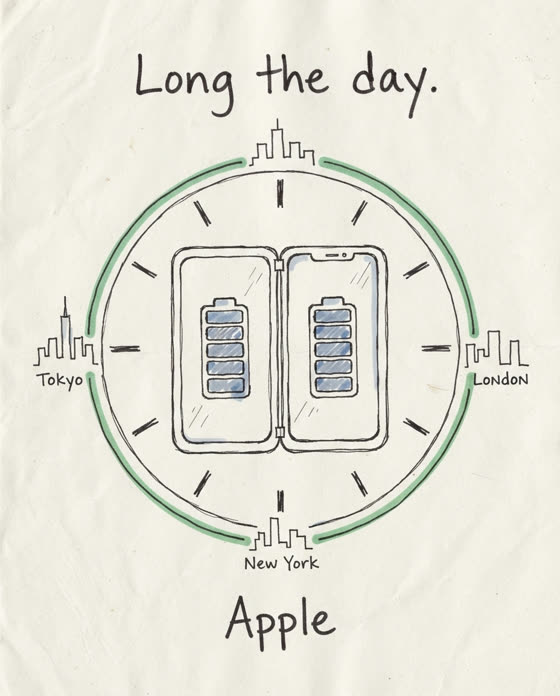
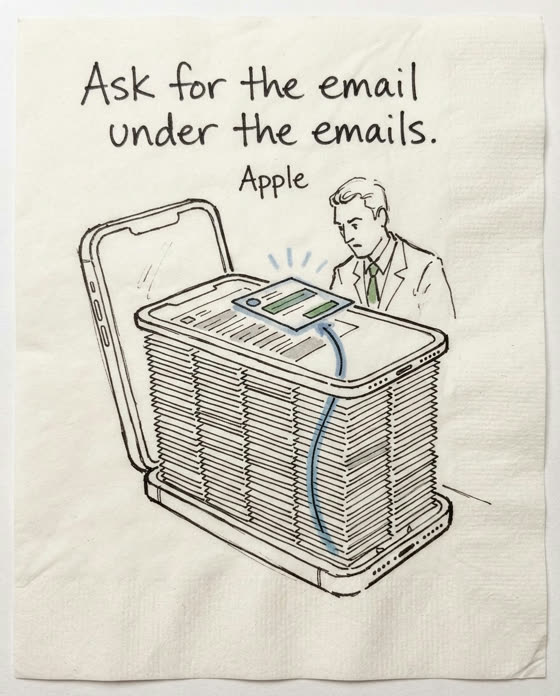
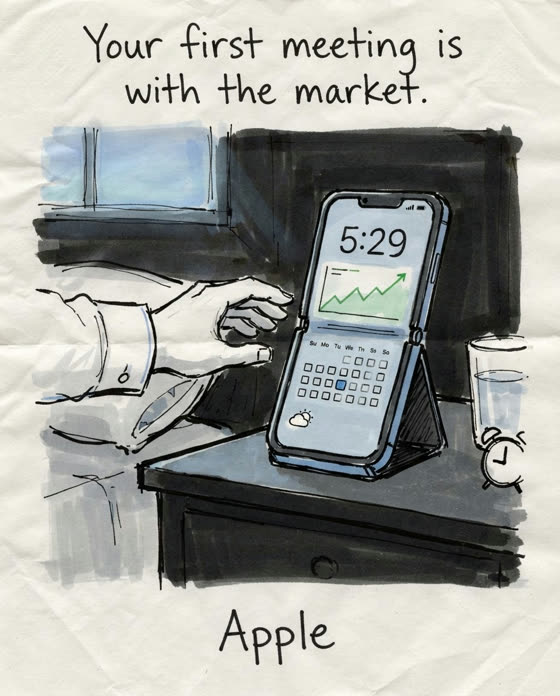
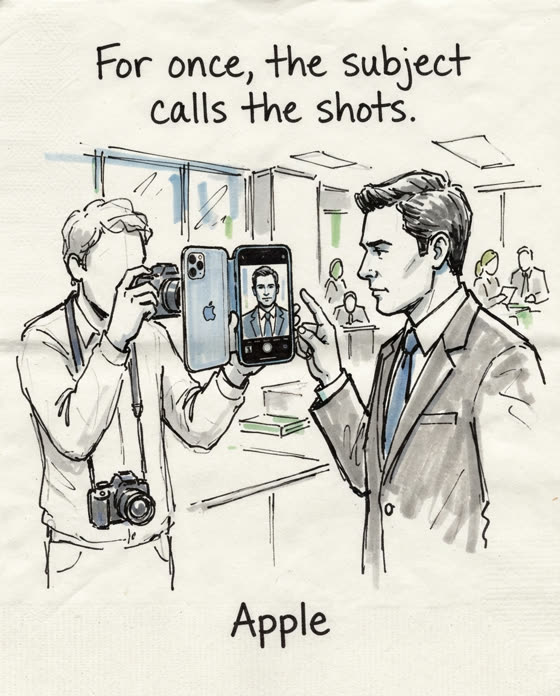
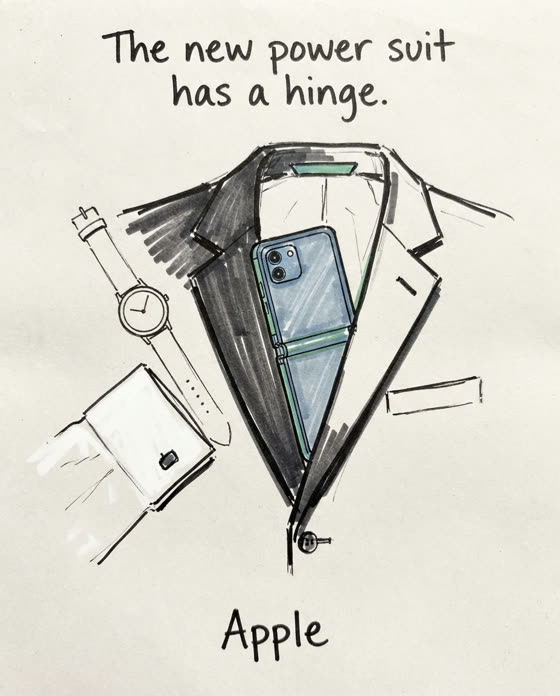
Not every one of the ten is good. “Hold the room. Not the phone.”: maybe. But “Long the day” is a real idea. It takes the trader's own language and turns battery life into a position on the global market day. There is a thought in there, which is more than you can say for most of what the models produce on their own. More on that below.
Ten concepts, ten minutes, ten dollars. What does that change?
Gardening
When fucking around is expensive, you have to be choosy before you start. You pick two or three directions, put your best people on them and hope one survives. That's architecture: design first, then build.
When fucking around is nearly free, a different strategy becomes rational. Brian Eno calls it gardening: plant a lot of seeds and see what grows. You stop protecting a few precious ideas and start cultivating a field of them.
It's tempting to stop there and declare that ideas are now free and the creative industry is over. But the cost of making an idea was only ever one of three variables. The other two haven't moved.
Variable one: is any of it spot on?
Give enough monkeys enough typewriters and one of them will write Hamlet. Nobody has ever used this as a business plan, because you'd have to read everything the other monkeys wrote. If all you can make cheaply is crap, the cost of ideation can be zero and you are still nowhere. A thousand bad ideas are not worth one good one; they're worth less, because somebody has to wade through them.
So the real question isn't how cheap the ideas are. It's how likely each one is to be spot on. And that is not just a property of the model.
What the models say on their own
To see what that looks like, we gave the same brief to twelve current models with nothing around them: “Promote new foldable iphone to the finance bros. Give me 5 advertising concepts for this brief. For each, give a headline and one sentence describing the idea.” Sixty headlines came back in under a minute, for about six cents in total.
They came back to the same few moves again and again:
Two pairs of models wrote word-for-word the same headline: “Diversify Your Screen.” (GPT-6.1 Sol and DeepSeek V4 Pro) and “Two screens. One alpha.” (Grok 4.7 and Kimi K3). Kimi also offered “Unfold Your Potential.” Ask the same model again and it repeats itself: in four runs, GPT-5.6 Sol gave “More Screen. More Upside.” twice and “From Pocket to Trading Floor.” twice.
All sixty headlines
- GPT-6.1 Sol: Big Deal. Small Fold. · Diversify Your Screen. · The Cleanest Exit on Wall Street. · Make a Power Move. · After-Hours Looks Good on You.
- GPT-5.6 Sol: Fold the Phone. Unfold the Alpha. · More Screen. More Upside. · Your Portfolio Diversifies. So Should Your Phone. · Fits in Your Pocket. Runs the Room. · The Biggest Flex Is Foldable.
- Claude Opus 5.5: 2x Leverage. No Margin Call. · See All 47 Columns. · Fits in the Vest. · The Only Fold You'll Ever Make. · Closes Faster Than Your Deal.
- Claude Sonnet 5.5: Know When to Fold. Now Your Phone Does Too. · Your Portfolio on the Left. Your Next Move on the Right. · The Bloomberg Terminal That Fits in Your Slim-Fits. · Fold It Once. Watch the Returns Unfold. · Close Deals, Not Laptops.
- Gemini 3.1 Pro: Your pocket-sized Bloomberg Terminal. · The ultimate power fold. · Hedge your screens. · Fits perfectly in your Patagonia vest. · Maximum leverage. Infinite upside.
- Gemini 3.8 Flash: Double the spread. · Fits in the fleece. Dominates the floor. · Terminal access, anywhere. · Finally, leverage with zero downside. · The modern way to close.
- Grok 4.7: Two screens. One alpha. · Closed for the commute. Open for the close. · Your edge doesn’t fit on one screen. · The flex that actually works. · From pre-market to post-close.
- DeepSeek V4 Pro: Unfold Your Edge · Diversify Your Screen · Leverage the Fold · The Only Fold That Compounds · Buy the Fold
- Qwen 3.8 Max: Unfold More Alpha. · The Only Thing Bigger Than Your Portfolio Is Your Screen. · Made for the Deal Flow. · Flip the Script on Wall Street. · Big Screen Energy. Small Commitment.
- Kimi K3: Two Screens. One Alpha. · The Only Fold That Appreciates. · Unfold Your Potential. · Built for Multitaskers. Priced for Bonuses. · Fits in Your Patagonia Vest.
- GLM 5.3: The First Phone With an Actual Return. · Diversify Your Portfolio. And Your Screen. · Bullish on Foldable. · Closes Like You Do. · Leverage Everything.
- Mistral Medium 3.5: Unfold Your Portfolio · The Only Fold That Pays Off · Close Deals, Not Apps · Wall Street in Your Pocket · Foldable. Flexible. Profitable.
Full answers, including the repeat runs: baseline.json.
None of it is wrong. Some of it is even fun: “See All 47 Columns.” But it's what every model reaches for first, because it's the average of everything they have read about finance bros. That's what free fucking around looks like without guidance: a lot of seeds, all from the same packet.
Left to themselves, the models are boring and they converge. And that breaks gardening. Planting a thousand seeds only pays if they are different seeds; a thousand of the same just gives you a field of the same plant. Cheap ideas are only worth having if something makes them diverge and makes the good ones more likely. That something is the harness around the model. In One Dollar Concept it looks like this:
- Something to collide with. Creativity is combinatorial: new ideas come from old things meeting in a new way. So the agent doesn't start from a blank page. It works against a library of about 22,000 cards from BriefBuster: award-winning work, creative moves, surprising facts, trends and cognitive biases. On top of that: 32 “insight lenses” (look at this brief as a taxi driver, a hostage negotiator, a New Yorker cartoonist) and 95 copy moves. Each one is a provocation, not a command.
- Randomness, but distrusted. Every brief gets its own random draw from the library, to push the thinking somewhere it wouldn't go on its own. But the agent is told plainly that random samples alone do not make ideas diverse.
- One owner, not a committee. A single agent works as strategist, writer and art director, the way a good creative team works as one head. No pipeline of specialised agents, no scoring judge.
- Taste, written down. The agent reads a short document distilled from our own reviews of its work. The goal it sets: “not competent advertising volume”, but “a small set of ideas that feel discovered rather than generated”. Among the kill criteria: “a category cliché with the client's logo attached” and “tasteful but dead: correct, polished and unsurprising”.
- A memory. Every concept made for a brief goes into a ledger. The next run on the same brief sees it and has to go somewhere else. Left alone, as the repeat runs above show, a model will happily sell you the same idea twice.
- Judgement before spending. Before it pays for a single sketch, the agent reviews its whole set for real variety. This rule came from a failure: the first twenty-concept run hit the count but “many entries exchanged props and metaphors around the same underlying thought”. The fix wasn't a judge. It was sending the agent back to the human situation, through lenses it hadn't tried yet.
BriefBuster, where the library lives, taught us a few more of these the hard way. A different model is a different distribution of ideas, so rerolling the same model mostly gets you its favourite tropes again. A hidden random card, never named, knocks the thinking off its rails. Generate cheaply, judge harshly: one of our filters works on the rule that “300 killers beat 3000 shrugs”. And never let the machine converge too early. A converged set is, by definition, vanilla.
None of this is magic. It's craft, just moved: from writing every line yourself to designing the conditions in which good lines are more likely to appear.
Variable two: what does it cost to find out?
Suppose the harness works and some of the ideas are good. Which ones?
If finding out is cheap, you don't have to know. Run them all as ads for a week and let reality pick. This is the pitch the big ad platforms make: give us a brief and a budget, we'll generate ten thousand variations and find the winner. The catch is what they call finding out. A click tells you which banner got clicked. It doesn't tell you whether you built a brand.
And a lot of the decisions that matter can't be thrown at reality at all. A launch campaign with a celebrity attached runs once. A rebrand takes years to prove itself. You cannot run seventeen versions of either and keep the best. Someone has to choose before the evidence exists, and someone has to answer for the choice.
So when the cost of fucking around goes to zero but the cost of finding out stays high, ideas get cheap but decisions don't. If anything, choosing gets harder and more valuable, because the pile is bigger.
Back to the chart
Now go back to the chart and put the three together. Push the cost of fucking around down to almost nothing while finding out stays expensive, in the bottom-right corner, and the pile of ideas grows enormous while the chance of success barely moves. Volume only pays when reality can do the choosing. Everywhere else, the two levers that matter are the ones that were always the job: making ideas more likely to be good, and choosing well.
What this means
Treat creativity as combinatorial. Ideas don't come from nowhere. They come from collisions between things that were already out there: a fact, a behaviour, a form, a turn of phrase. Once you see it that way, you can design the collisions instead of waiting for them.
Put the craft where the leverage has moved. Two places: into raising the odds of an “aha” (what you collide, how you push away from the obvious, what you kill), and into selection (taste, judgement, and someone willing to own the decision).
Build your own harness. A model is the same for everyone. The library you feed it, the taste you write down for it and the rules you give it for variety and judgement are yours. Every creative company should now have one. It's what we build at move38 for some of our clients.
This is also the bet behind the Artificial Creativity Manifesto: that machines can be made to produce surprising, specific, human ideas rather than the self-reinforcing average, and that getting there takes a system, not a single model. One Dollar Concept is a small step in that direction: short-form commercial ideas, made by a hybrid of a model, a library, some randomness and written-down human taste.
The cost of fucking around is approaching zero. The cost of finding out isn't. Everything interesting now happens in between.